Obby World: Brainrot World
- 4.5
- Rating
- 1.00M
- Installs
- Free
- Price

 Analysis by App-foxy
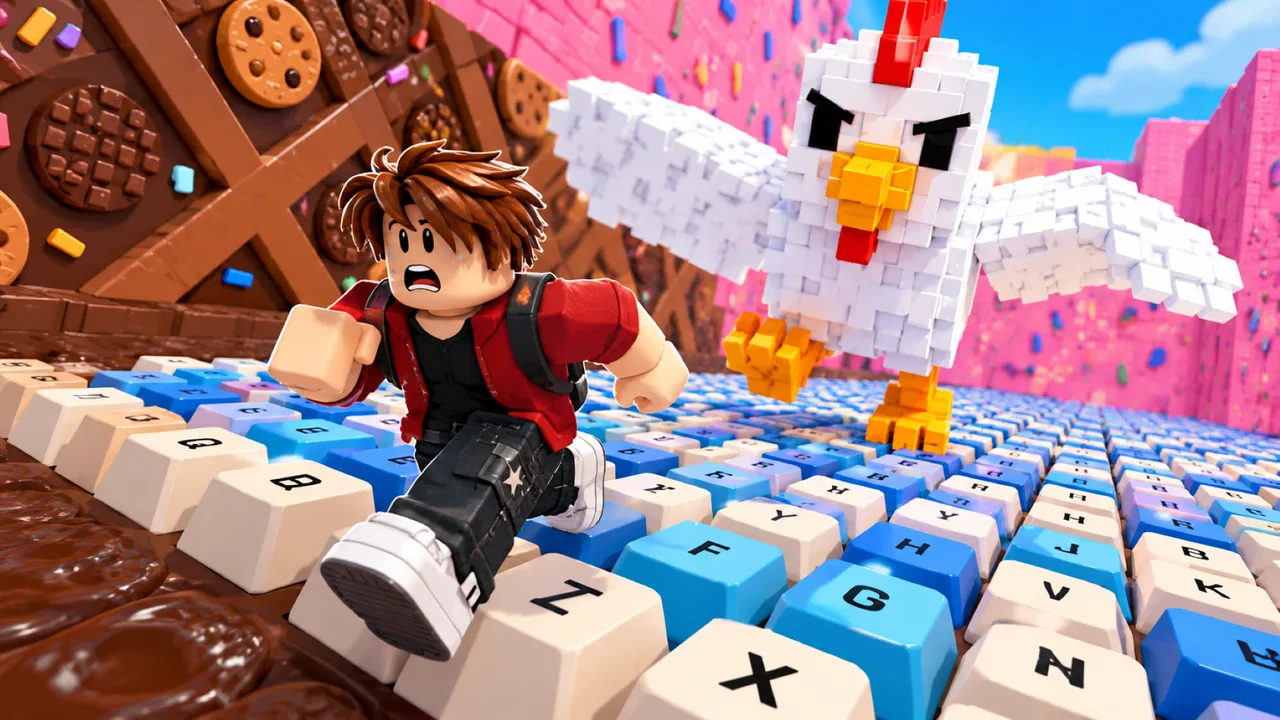
I found Obby World: Brainrot World easy to understand at a glance: it is a free arcade game built around obstacle-course levels, with a playful theme focused on finding, escaping with, and stealing brainrot items. The basic appeal is immediate. You move through unusual courses, look for the objective, avoid mistakes, and try to finish before the level’s layout or hazards slow you down.
That simplicity is useful for a first-time player. I did not approach it as a deep strategy game or a long story adventure. I approached it as a quick, reflex-focused game for short sessions, where the satisfaction comes from learning a route and finally getting through a section that caused trouble before. If you enjoy obby-style challenges and the deliberately chaotic humor associated with brainrot-themed games, the concept should feel familiar without requiring much explanation.
What to expect when you start playing
The game sits in the arcade category, so the main experience is about movement, timing, and repeated attempts rather than collecting a complicated set of menus or managing a large character system. The store summary points toward crazy obby levels, and that is the right way to set your expectations: the course itself is the star. You are likely to spend more time watching platforms, judging jumps, and remembering safe paths than reading instructions.
You May Also Like

 Google Keep - Notes and lists
Google Keep’s Quiet Growth Shows the Appeal of Simpler Notes
As mobile work gets busier, Google Keep keeps winning a simple contest: capture a thought quickly, find it later, and get on with the day.

 Blood Strike: 2.5 Anniversary
Blood Strike’s Loadouts Turn Every Drop Into a Tactical Gamble
A close look at Blood Strike’s custom loadouts: how fast access to signature weapons reshapes its battle royale rhythm, rewards preparation, and narrows the gap between fights.

 Pandora - Music & Podcasts
Pandora’s Music Is Easy to Start, but Harder to Recover
Pandora’s strength is its low-effort path from a seed to a station. Its weak spot is how much confidence it asks you to place in connection, setup, and quiet recovery.

 8 Ball Pool
 Is Built on Rivalries, Rematches, and Routine
A close look at the rivalries, rematches, shared routines, and unanswered safety questions that turn a quick pool match into a persistent mobile community.

 Samsung Music
’s Quiet Strength Is Playing What You Already Own
Its reach comes less from spectacle than from dependable access to a personal library. That simplicity is both the app’s strongest retention engine and its ceiling.

 AccuWeather: Weather Radar
AccuWeather Review: A Quick, Clear Forecast for Everyday Decisions
For everyday plans, the best forecast is the one you can understand quickly. AccuWeather makes rain timing, radar, and local conditions easy to act on, with a few trade-offs.
More From Our News Desk



That makes it a good fit for a quick break. I can imagine opening it while waiting for an appointment, playing a few attempts, and closing it without feeling that I have abandoned a long quest. It also works for younger players who prefer clear goals, although an adult may need to explain the idea of an obby if this is their first game in the format. The content rating is Everyone, which matches the light, accessible presentation.
The free entry point is another practical advantage. You can try the core experience without paying up front, while optional in-app purchases range from around one dollar to around ten dollars per item. I would treat those purchases carefully during a first session. The important question is whether the movement and level design are enjoyable before spending anything, because a purchase cannot replace the satisfaction of learning a difficult route.
The game has attracted over a million installs and holds a 4.5 average from roughly a thousand ratings. Those figures suggest that the concept has found an audience, but they should not replace your own first impression. Obby games can feel very different depending on how patient you are with repeated failures. Someone who enjoys retrying a jump may find the challenge motivating, while someone looking for relaxed exploration may find the same design tiring.
How the theme affects the experience
The brainrot theme gives the game its personality, but it is not the only reason to play. The useful part is how the theme makes the objectives feel more playful than a plain obstacle course. Searching for an item and getting away with it creates a small sense of mischief, while the strange visual framing keeps the levels from feeling like anonymous platforms.
Still, I would not choose this game expecting a carefully developed narrative. Its strength is the moment-to-moment challenge, not a detailed story or a large role-playing system. If your favorite arcade games are built around quick reactions and visible progress, this direction makes sense. If you prefer narrative adventures, puzzle games with layered clues, or competitive games with complex rankings, a different category will probably serve you better.
My first setup and the first useful goal
After installing the game, I recommend beginning with a simple target: reach the first meaningful objective rather than trying to understand everything at once. Look at the course, identify where the route appears to lead, and move slowly during the opening attempt. The first run is valuable even when it ends quickly because it shows which surfaces are safe, where the course narrows, and which jumps require more commitment.
One mistake new players make in obby games is treating every jump as a speed test. I found it more helpful to use the first attempt as reconnaissance. Let the character settle after landing, check the next platform, and only then plan the following movement. This approach feels slower, but it usually produces more useful information than rushing forward and repeating the same error without knowing why it happened.
For a first-time user, the most reassuring path is simple: start a level, move through the opening section, observe the hazard pattern, and repeat the route with one adjustment. Do not measure success only by finishing immediately. In this kind of game, recognizing the correct line through a course is already progress. Once you know where the difficult section begins, you can focus your attention instead of reacting to the whole level at once.
How to reach your first successful action
Your first satisfying success will probably come from completing one small sequence cleanly. Instead of looking at the entire obby as one challenge, divide it into landmarks. A landmark might be a platform after a jump, a turn before a narrow section, or the point where the objective becomes visible. Reaching the next landmark gives you a concrete short-term goal and makes failure easier to diagnose.
I also recommend keeping your movements deliberate near an objective. Players often become less careful when they can see the finish or the item they are trying to reach. In practice, that is when a rushed jump can erase a good run. Treat the final approach as its own section. Pause mentally, line up the movement, and avoid changing direction simply because the goal is close.
When a run fails, ask one specific question: was the problem timing, positioning, or impatience? If the character landed short, adjust the jump timing. If the character moved past a platform, use a gentler direction change. If you reached the right place but fell while rushing, slow the final movement. This small habit turns retries into practice rather than random repetition.
A realistic everyday use case is a short evening session after finishing a routine task. I would play until I complete one course section or improve a difficult attempt, then stop. That gives the game a natural endpoint and prevents the familiar arcade problem of continuing only because the previous run went badly. It is especially useful when you want a quick mental reset without committing to a long multiplayer match or a story chapter.
Common confusion for new players
The biggest early confusion is understanding what the game wants you to prioritize. The theme may make the world look busy or intentionally absurd, but the immediate task remains practical: read the route, stay on the course, and reach the relevant objective. If you spend too much time looking at the theme instead of watching the path, the game can feel more chaotic than it really is.
Another source of frustration is assuming that speed always equals skill. In an obby, control is usually more valuable than rushing. A fast attempt can be useful after you already know the route, but it is a poor learning method when you are still discovering the level. I would first aim for a clean, cautious run and only experiment with faster movement after the sequence feels familiar.
It is also easy to interpret a failed jump as a sign that the level is unfair. Sometimes the real issue is that the previous landing left the character poorly positioned for the next move. Try to finish each jump in a stable place rather than merely surviving it. That creates a better starting point for the next action and reduces the number of situations where you are forced into an awkward correction.
The objective wording may also require a moment of adjustment. Finding, escaping with, and stealing brainrot items are not the same mental task as simply reaching a finish line. Pay attention to what you are supposed to do after locating the target. Reaching an interesting area may not be enough if the level expects you to continue moving or leave successfully. I found it safer to think in two stages: secure the objective, then complete the escape route.
Players should also remember that a free game with optional purchases can encourage curiosity about extras. I would not open the purchase screen until I know whether I enjoy the basic movement. If a purchase offers convenience, ask whether it solves a genuine problem or merely shortens the learning process. For me, the learning is part of the appeal, so spending money to bypass every difficult section would reduce the reason to play.
Where it fits among arcade alternatives
Compared with a traditional endless runner, this game offers a more deliberate route-learning experience. Endless runners usually emphasize continuous forward motion and quick reactions to whatever appears next. Here, the useful skill is remembering a course and improving a particular section. That makes it better for players who enjoy mastery through retries, but less suitable for someone who wants a fresh, rapidly changing run every time.
Compared with a pure platform game, the brainrot framing gives the objectives a more playful identity. A conventional platformer may focus mainly on reaching the end, while this game adds the idea of finding and escaping with a themed target. That extra goal can make the route feel more purposeful, although players seeking precise, highly technical platforming may prefer a game designed around advanced movement rather than a broad, accessible arcade presentation.
It also differs from a puzzle game because the solution is usually discovered through movement and observation rather than by manipulating a set of clues. You can think about the route, but success depends on carrying out the actions accurately. If you enjoy solving a path and then practicing it, that combination should work well. If you want every challenge to have a single logical answer with no reflex requirement, this may not be the right choice.
The developer is NABA TECHNOLOGY INVESTMENT JOINT STOCK COMPANY, and the current version is 0.74. The game supports devices running at least Android 7.1, so people using older hardware should check compatibility before expecting a smooth start. I would also give the game a fair trial on the device where I plan to play most often. Obby controls can feel very different on a smaller screen, and comfort matters when a level demands repeated precision.
Useful habits for making progress
My first practical tip is to build a route memory instead of relying only on reaction. After one attempt, describe the course to yourself in short phrases: jump, turn, narrow landing, objective, escape. This creates a mental sequence that is easier to follow than a vague memory of the whole level. It is especially helpful when several sections look similar.
My second tip is to change only one behavior between attempts. If you alter speed, direction, timing, and camera position all at once, you will not know what improved the result. Pick the most likely cause of failure and adjust that alone. This makes the retry process more like practice and less like guessing.
My third tip is to use a successful section as a checkpoint in your thinking, even when the game itself does not present progress in that exact way. Once you consistently reach a landmark, stop spending attention on the opening. Concentrate on the next problem. This reduces mental fatigue and keeps a difficult level from feeling like one enormous task.
A fourth trade-off is worth understanding: cautious play improves reliability, but it can also make a session feel slower. Once you have learned a route, gradually increase your pace rather than trying to play at full speed immediately. That lets you keep the control you developed while adding the excitement of a faster run.
Who should try it and who should skip it
I would recommend this game to players who like short arcade sessions, obstacle courses, colorful absurdity, and the feeling of improving through repetition. It is particularly approachable if you have never played a demanding platform game but want a clear introduction to the obby format. The free starting point makes it easy to test without treating the decision as a major purchase.
I would be more cautious about recommending it to someone who dislikes failure loops. Even a well-designed obstacle course asks you to repeat sections, and the brainrot theme does not remove that basic structure. Players who want calm exploration, a deep story, or long-term character development should look elsewhere. The same is true for anyone who prefers games where progress comes mainly from equipment upgrades rather than personal timing and route knowledge.
Parents and younger players may appreciate the Everyone rating, but I would still explain the optional purchases before handing over a device. The game is free to start, yet individual items can cost from around one dollar to around ten dollars. Setting that expectation early avoids confusion and keeps the focus on playing rather than browsing paid options.
My recommendation after learning the rhythm
What I like most is the clear loop: enter a course, study the route, make an attempt, understand a mistake, and try again with a better plan. The themed objectives give that loop more character than a bare collection of jumps, while the arcade structure keeps the experience manageable in short sessions. I also appreciate that the first meaningful success can arrive through a simple change in approach, such as slowing down before a narrow landing.
The main limitation is equally clear. If the course design does not hold your attention, there is no elaborate story or management system to pull you back in. The game depends on whether its obstacle challenges and unusual theme match your taste. Optional purchases are another reason to keep expectations practical: I would judge the free experience first and spend only if an extra genuinely improves the way I want to play.
For a new player, my advice is to install it, begin with a patient reconnaissance run, and aim to complete one recognizable section rather than demanding an immediate perfect finish. Watch how the route is arranged, separate the objective from the escape, and change one habit after each failed attempt. That path makes the opening feel much less intimidating.
Overall, Obby World: Brainrot World is a cheerful arcade choice for anyone who enjoys obstacle courses with a deliberately strange theme. I would recommend it as a low-commitment game for short breaks and repeatable challenges, not as a replacement for a full platform adventure. Give it a fair session, learn the course instead of racing blindly, and you will quickly discover whether its particular mix of brainrot humor and obby movement is the kind of simple challenge you want to keep revisiting.
FAQs for Obby World: Brainrot World
01What is the main objective of Obby World: Brainrot World?
Obby World: Brainrot World is a captivating platformer that challenges players to navigate through a series of increasingly difficult obstacle courses. The main objective is to reach the end of each level by overcoming various challenges, including traps and puzzles, while collecting bonuses and unlocking new features to enhance gameplay.
02Is Obby World: Brainrot World suitable for all ages?
Obby World: Brainrot World is designed to be enjoyed by a wide range of ages. While its vibrant graphics and straightforward controls make it accessible to younger players, the intricate levels and strategic elements offer a challenge that can engage older audiences as well. Parental guidance is advised for very young children.
03What are the in-app purchases in Obby World: Brainrot World?
The game offers various in-app purchases that enhance the gaming experience. Players can buy cosmetic items to customize their characters, power-ups to help navigate difficult levels, and additional levels for extended gameplay. These purchases are optional and not necessary to complete the game but can offer a more personalized experience.
04Does Obby World: Brainrot World require an internet connection?
Obby World: Brainrot World can be played offline, which is perfect for gamers on the go or those with limited internet access. However, an internet connection is required for certain features, such as leaderboards, multiplayer modes, and downloading additional content or updates from the developers.
05What platforms support Obby World: Brainrot World?
Obby World: Brainrot World is available on both Android and iOS platforms. The game is optimized for a wide range of devices, ensuring smooth gameplay and vibrant graphics on smartphones and tablets. Players can download the game from the Google Play Store or the Apple App Store, depending on their device.
Pros
- Engaging puzzles with increasing difficulty.
- Visually appealing graphics and design.
- Regular updates with new levels.
- Intuitive controls for smooth gameplay.
- Encourages creative problem-solving.
Cons
- In-app purchases can be pricey.
- Occasional ads interrupt gameplay.
- Requires internet for full features.
- Some levels may feel repetitive.
- Limited offline play options.

Obby World: Brainrot World
Gallery